Hello Doctor: A Playful Script Handwritten Font for Brands
When I opened a blank brand board for a local artisan bakery last week, I knew the standard sans serif options wouldn’t cut it. The client wanted warmth, approachability, and a touch of whimsy that felt handmade rather than manufactured. That is when I pulled up Hello Doctor, a cute handwritten font that immediately brought a smile to my face. As an experienced designer, I have tested countless typefaces, but few Fonts manage to balance personality with usability as effectively as this one. It sits comfortably in the Script Handwritten category, offering a casual yet polished look that works wonders for specific branding needs.
Testing Hello Doctor on Logo Concepts and Brand Identity
The first place I always test a new typeface is on a logo draft. For the bakery project, I needed something that would look good on a storefront sign and a small social media avatar. Hello Doctor proved to be surprisingly versatile in this regard. Its strokes are thick enough to remain legible at smaller sizes, yet they retain the organic irregularities that define high-quality Script Handwritten styles. Unlike some decorative fonts that fall apart when scaled down, this font maintains its integrity. I found that it worked best as a standalone logotype or paired with a clean, minimal sans serif for the tagline. The result was a brand identity that felt personal and inviting, exactly what the client wanted to convey to their community.
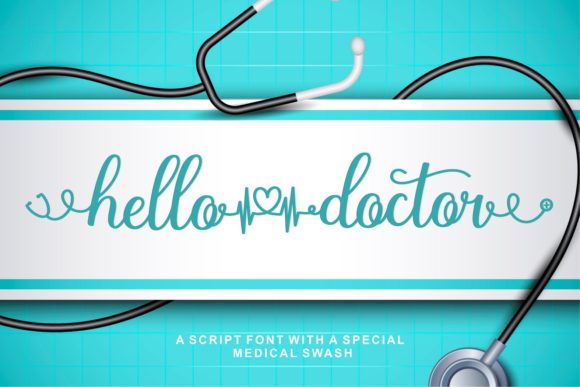
One of the standout features mentioned in the description is that Hello Doctor is a cute handwritten font. This amazing font is perfect for greeting cards, crafting projects, stationery and much more This font is PUA encoded which means you can access all of the ama. In practical terms, PUA encoding is a lifesaver for designers. It means I could access special characters, ligatures, and alternates directly through my keyboard or character map without needing complex software workarounds. This efficiency allowed me to tweak the logo quickly, adding a subtle swash to the capital letter to create a unique brand mark without spending hours on manual vector editing.
Using Hello Doctor for Packaging Design and Product Labels
Moving from the logo to the packaging mockup, I applied Hello Doctor to a series of cookie boxes and jam jar labels. In packaging design, typography must do more than just look pretty; it needs to guide the eye and communicate the product’s essence instantly. This font excelled here. Its playful nature made the products feel artisanal and crafted with care. When used on a kraft paper background, the dark ink of the font popped beautifully, creating a strong visual hierarchy. I paired it with a simple geometric sans serif for the ingredient lists and nutritional information, ensuring that while the brand name stood out as a decorative element, the essential data remained easy to read.
It is important to note that while Hello Doctor is fantastic for headlines and short phrases, it is not suitable for long blocks of body text. The handwritten style can become tiring to read in paragraphs. Therefore, I used it strictly for product names, short descriptions, and call-to-action buttons on the packaging. This strategic use ensured that the font enhanced the user experience rather than hindering it. For anyone working with physical products, this font is a strong contender for adding a human touch to shelf presence.
Creating Engaging Social Media Graphics and Stationery
Beyond physical products, I tested Hello Doctor in digital spaces, specifically for Instagram posts and story templates. Social media moves fast, and visuals need to grab attention immediately. This font’s bold, friendly curves performed well in carousel headers and quote graphics. It added a layer of authenticity that stock photos alone could not achieve. I also used it for a set of digital stationery designs, including thank-you cards and appointment reminders. As noted, Hello Doctor is a cute handwritten font. This amazing font is perfect for greeting cards, crafting projects, stationery and much more This font is PUA encoded which means you can access all of the ama, and this held true in my digital workflow. The ease of accessing alternate glyphs allowed me to create varied layouts that didn’t look repetitive, keeping the content fresh and engaging for the audience.
For crafters and small business owners who sell handmade goods, this font is particularly valuable. It mimics the look of actual hand-lettering, which resonates deeply with buyers looking for unique, non-mass-produced items. Whether used on Etsy banners, printable planners, or wedding invitations, Hello Doctor delivers a professional yet personal aesthetic. It bridges the gap between amateur handwriting and professional typography, giving creators a tool that elevates their work without requiring advanced illustration skills.
Pairing Advice and Practical Limitations for Designers
While I highly recommend Hello Doctor for many projects, it is crucial to understand its limitations. It is a display font at heart. Do not attempt to use it for corporate reports, legal documents, or any context requiring strict formality. Its charm lies in its imperfection, which can clash with serious or sterile environments. When pairing this Script Handwritten font, stick to neutral companions. A light or regular weight sans serif works best to ground the playfulness of the script. Avoid pairing it with other scripts or overly decorative serif fonts, as this can create visual clutter and reduce readability.
Before finalizing any client work, always test the font across different mediums. Print a sample on the actual paper stock you plan to use, and view it on multiple screens. Check how the PUA-encoded characters render in your specific design software. Also, always review the commercial license. While Hello Doctor is a powerful asset for branding, packaging, and digital products, ensuring you have the correct rights for merchandise, webfonts, or large-scale print runs is a necessary step in professional practice. By respecting these boundaries and leveraging its strengths, you can create compelling, memorable designs that connect with audiences on a human level.